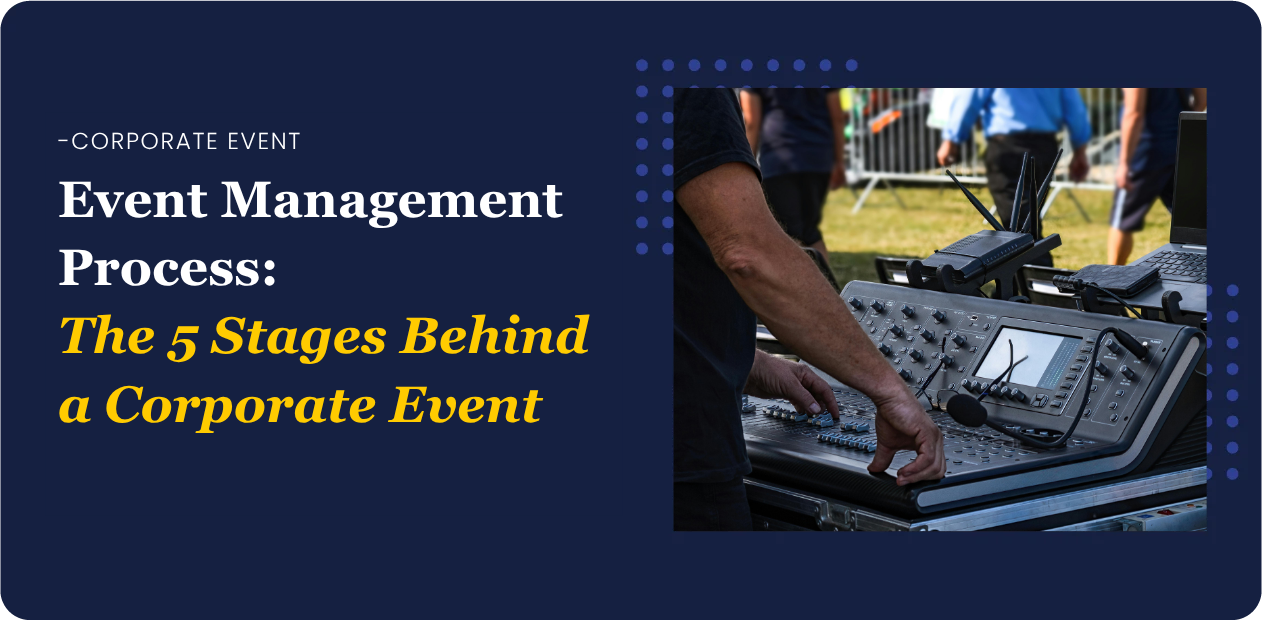

The event management process outlines the steps a corporate event goes through, from the initial brief to the final report. This process has five stages, each with its own decisions, deadlines, and approvals that affect whether the final event matches the approved plan.
Many teams learn this the hard way. For example, a vendor might confirm details over WhatsApp without any written record. A venue issue could come up two weeks before the event. A proposal may seem complete but lack detailed line items, leaving no time to address problems before the event.
Having a clear process helps avoid these issues. It outlines every decision, such as goals, budget, venue, compliance, and delivery, in a set order. It also assigns responsibility for each decision and makes it clear when something goes off track. This process helps keep an event from running into problems.
This guide breaks down the five stages of event management, clarifying what you are responsible for at each stage and what a partner is responsible for. It also includes questions to ask before you work with anyone, whether it’s an internal team, freelancers, or an agency. If you are planning your next event, this guide will help you stay organized.
Key Takeaways
- The event management process has five stages: brief, concept and proposal, pre-event planning, execution, and post-event reporting.
- Corporate events rarely fail in planning. They fail in delivery when an agreed plan meets a real venue, vendor, or deadline.
- Four things stay with you regardless of who you hire: the objective, budget approval, brand sign-off, and internal communication.
- Compliance belongs in stage three: venue NOCs, licensing, and GST treatment, not a last-week scramble before the event.
- EVENX recommends starting 90–120 days out for large events, 45–60 days for smaller ones, and 4–6 months for global exhibitions.
- A single named client-side owner with approval authority prevents more delays than any vendor upgrade does.
What Is the Event Management Process?
The event management process involves planning, coordinating, and delivering an event to meet a business goal. This begins with the initial brief and ends with a report that measures success against that goal.
It’s important to understand the difference between two terms that people often confuse: event planning and event management. Event planning is about creating the blueprint, which includes setting objectives, creating a budget, choosing a format, selecting a venue, and outlining the agenda. In contrast, event management is about executing that plan. It involves keeping everything on track despite challenges like vendor delays, venue restrictions, speaker changes, and unexpected issues on the day of the event. Planning wraps up once the plan is approved, while management continues until the last truck leaves the venue.
This difference helps explain many event failures. Events typically do not fail during the planning phase. Instead, they often falter when a well-prepared plan runs into venue restrictions or a vendor that didn’t finalize the agreement.
The 5 Stages of the Event Management Process
Every corporate event, whether it’s for 60 leaders or 1,300 delegates, goes through the same five steps. The size may differ, but the order stays the same.
Stage 1 – The Brief
This stage defines the business goal, audience, success metrics, budget, brand standards, and non-negotiables, like a board meeting date or a product launch date. A common mistake is focusing on the event type instead of the goal. For example, saying “We want an awards night” describes an event type, while “We want to keep our top 40 channel partners during a tough pricing year” defines the goal and might lead to a different event format altogether.
Stage 2 – Concept and Proposal
Your partner takes the brief and creates a creative direction, event schedule, technical plan, and a cost proposal with clear details and timelines. Always check the specifics, not just the visuals. A good proposal lists what is included, what isn’t, and what changes might occur. A mistake is providing a single total cost without breaking it down, which makes it hard to compare vendors and track what’s included.
Stage 3 – Pre-Event Planning
This is the longest step and is crucial for success. It includes venue contracts, site visits, vendor onboarding, content creation, registration setup, technical needs (like staging and AV), compliance, and rehearsals, all organized in a master project plan. A common issue is doing a site visit over video call. Some things, like power supply and setup points, should be confirmed in person.
Stage 4 – On-Ground Execution
This step involves building the event, installing technology, rehearsing, and running the live show. The run-of-show is a detailed document that tells everyone what to do and when. A frequent problem is lacking a clear escalation path. When something goes wrong live, if no one is assigned to make quick decisions, you can miss important moments.
Stage 5 – Post-Event Reporting
This stage provides attendee data and event materials, compares spending to the budget, and reviews results based on the goal set in the first stage. A common failure is skipping the debrief, which means the next event may repeat the same mistakes.
Who Owns What: Your Team vs Your Event Partner
At every stage, you need to keep track of four things: the goal, budget approval, brand approval, and internal communication. A partner manages all operational tasks, but they do not handle those four items. If roles aren’t clear, events can go wrong.
| Stage | You Own | Your Partner Owns |
|---|---|---|
| 1. Brief | Objective, budget envelope, non-negotiables | Structuring the brief, surfacing what you haven't considered |
| 2. Proposal | Brand sign-off, scope approval, vendor choice | Creative direction, technical approach, costed scope |
| 3. Planning | Speaker availability, content approvals, invoice release | Venue, vendors, production, registration, compliance |
| 4. Execution | Being reachable for live decisions above an agreed value | Run-of-show, crew, technical delivery, contingency handling |
| 5. Post-event | Deciding what "success" was measured against | Data, assets, reconciliation, debrief |
Name one person who can approve decisions on their own, not a group. Groups can slow down the creative process, often leading to delays of three weeks or more, which impacts production and the entire plan.
When comparing partners, use this table as a key question: ask any agency you’re considering to explain how they’ll share responsibilities for your event. Vague answers here are a clear warning sign.
How Long Each Stage Takes, and When to Start?
Start planning from the event date and work backward, instead of beginning from today. Most timeline issues arise when you start at the wrong point.
| Event Size | Total Lead Time | Planning Window | Execution |
|---|---|---|---|
| Up to 150 attendees | 45–60 days | 4–6 weeks | 2–3 days |
| 150–500 attendees | 75–90 days | 8–10 weeks | 3–5 days |
| 500+, multi-day or multi-city | 90–120 days | 10–14 weeks | 5–10 days |
| International exhibitions | 4–6 months | — | Varies by show |
Two things compress badly regardless of event size: venue contracting in peak season (roughly October to February across most Indian metros, when preferred dates disappear months out), and custom fabrication, which needs its own lead time no matter how fast the rest of the plan moves.
The Compliance Checkpoints Indian Corporate Events Miss
Most Indian corporate events fail to prepare for six key checkpoints, and all of them are important during stage three, not just in the final two weeks.
| Checkpoint | What It Covers |
|---|---|
| Venue NOCs and clearances | Fire safety, police permission for large gatherings, structural approval for temporary builds |
| Music licensing (PPL/IPRS) | Required for recorded or live music at a commercial event |
| Liquor permit | Event-specific permit where alcohol is served; a venue's own license often doesn't cover you |
| GST treatment | Event management services are taxed under SAC 998596; input credit depends on your registration and place of supply; confirm the specifics with your tax advisor |
| Vendor insurance and H&S | Public liability, crew insurance, rigging and structural certification |
| Drone and filming permissions | Aerial coverage needs clearance well ahead of the date |
Two common misunderstandings often trip people up. Many think that music licensing is the responsibility of the venue or the DJ, but that’s not true, and it’s taken seriously. Additionally, if the venue is in a different state from your registered business, the rules for how GST appears on the invoice change. Discuss this with your finance team early on, not later.
Most guides on this topic come from software companies and hospitality schools outside of India, and they often miss these details. If you’re comparing partners, make sure to ask who handles each of these six items before you sign anything.
Conclusion
The event management process is straightforward but requires careful order. Start with objectives, then decide on formats. Define the scope before getting signatures, and ensure you have clearances before the final two weeks. Assign one named owner on each side for every stage.
If you’re thinking about whether to host your next event in-house, use various vendors, or hire a single partner, use the process above to evaluate your options. EVENX follows this approach for product launches, conferences, dealer meetings, and offsite events in India and internationally.
Get Your Process Mapped to Your Date
For the full picture of what we deliver, see our corporate event management services.
Frequently Asked Questions
1. What are the 5 stages of event management?
Brief, concept and proposal, pre-event planning, on-ground execution, and post-event reporting. The brief sets the objective, the proposal costs it, planning builds the event, execution delivers it, and reporting closes the loop.
2. Who is responsible for what in the event management process?
You keep the objective, budget approval, brand sign-off, and internal communication. Your partner owns venue and vendor management, production, compliance, delivery and reporting. Name one client-side approver; split approval is the most common cause of delay.
3. How far in advance should you start planning a corporate event?
90–120 days for events over 500 attendees or multi-city programs, 45–60 days for smaller ones, and 4–6 months for international exhibitions. Add time in peak season, when venue availability across Indian metros tightens between October and February.
4. How do you measure the success of an event?
Against the objective set in stage one, not attendance alone. Depending on the brief, that’s qualified leads, partner retention, sentiment scores or media reach, agreed before the event and reported after it.