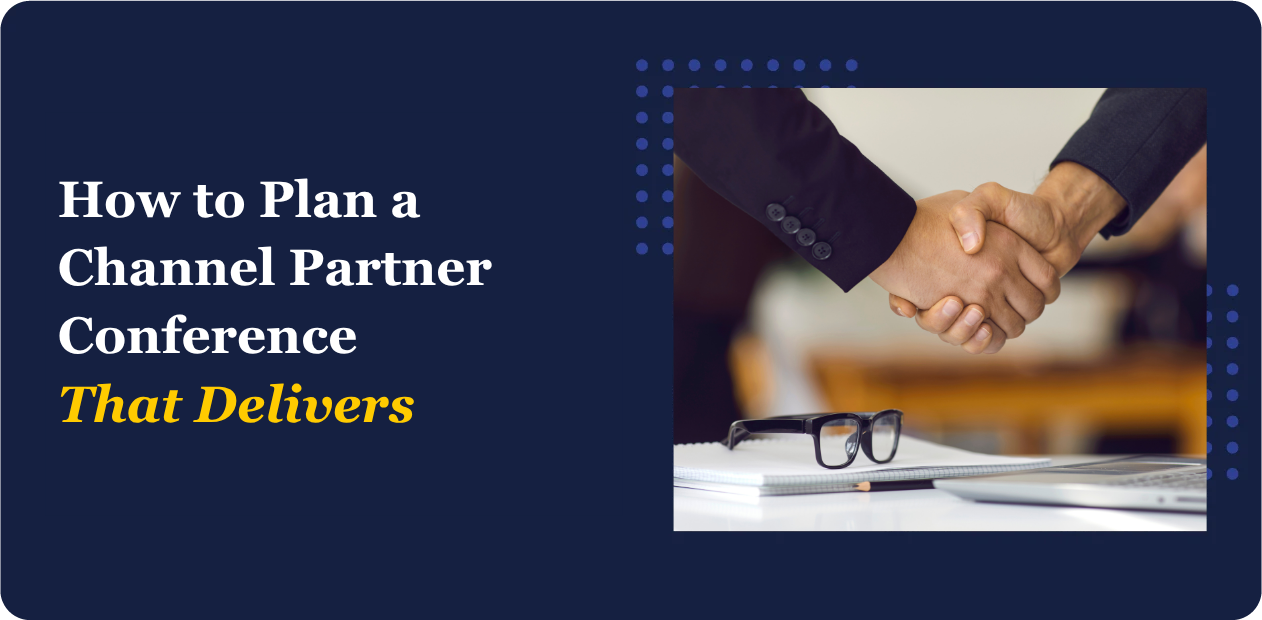

A channel partner conference is an event a company hosts for its external partners, such as dealers, distributors, and resellers. The goal is to align them on strategy, recognize top performers, and strengthen their commitment for the upcoming year.
If the event is not done well, it can have real costs. Partners who feel overlooked during their own recognition event may not renew their commitment. Instead, they might shift their focus to competitors who treat them better.
This guide comes from a team with hands-on experience in planning these events across India. It covers the different formats, a step-by-step planning process, realistic costs, and how to pick an organizer who can effectively recognize partners at scale.
When done right, a partner conference can be one of the most rewarding events on your calendar, encouraging your best partners to continue supporting you for another year. Let’s begin by explaining what a channel partner conference is and how it differs from a dealer meet.
Key Takeaways
- A channel partner conference is for your external network, dealers, distributors, resellers, not internal staff, and that changes how you plan everything.
- Five formats dominate: annual national meet, regional meet, product-launch meet, partner awards night, and partner sales kickoff.
- Partners remember and respond to recognition and hospitality, not the business agenda.
- Budget is driven by scale, destination vs. city, and production quality; serious planning starts 60–90 days out.
- Choose an organizer on proof of real partner-event delivery and recognition production at scale, not on price alone.
- A neutral RFP/vendor-evaluation checklist is the fastest way to avoid picking the wrong partner.
What Is a Channel Partner Conference?
A channel partner conference is an event a company hosts to bring together its outside sales and distribution network, including dealers, distributors, resellers, and agents. The purpose is to align them on strategy, launch products, recognize top performers, and strengthen relationships for the coming year. Unlike an industry event where you buy a ticket to attend, this conference is built around your specific partners.
The key difference is who attends. A sales conference is for your own employees, who already earn a salary from you. In contrast, a channel partner conference includes individuals who choose to represent your products and could easily promote a competitor’s products. This fact makes it crucial to put extra thought into the venue, recognition, hospitality, and every interaction with leadership.
In India, terms like “channel partner conference,” “channel partner meet,” and “dealer meet” are often used interchangeably. We explore how to plan these types of events in detail in our dealer meet planning guide.
Here’s how the three events compare:
| Channel partner conference | Dealer meet | Sales conference | |
|---|---|---|---|
| Audience | External partners, dealers, distributors, resellers, agents | External dealers & distributors | Internal sales team (employees) |
| Purpose | Alignment, recognition, roadmap, loyalty | Same, often the same event | Internal targets, training, strategy |
| Core stake | Partners have a choice; the event must earn their continued commitment | Same | Employees are already committed |
Get the audience distinction right, and the rest of your planning follows.
Types of Channel Partner Conferences
There are five main types of partner conferences in India: the annual national meet, the regional meet, the product-launch meet, the partner awards night, and the sales kickoff. The type of event you choose affects your scale, budget, and agenda more than your industry does.
- Annual National Partner Meet: This is the biggest event, where you review the year, set new targets, share product news, and recognize achievements. It usually involves 200–700 partners at popular destinations like Goa, Jaipur, or Udaipur.
- Regional Partner Meet: These are smaller events focused on specific areas, like North, South, East, or West. They typically have 50–200 attendees in cities like Pune, Bengaluru, Mumbai, Hyderabad, or Delhi-NCR.
- Product-Launch Partner Meet: This event helps partners learn how to sell a new product right away. It includes demonstrations, sales tools, and hands-on Q&A sessions.
- Partner Awards & Recognition Night: This can be a standalone event or part of the annual meet. It publicly recognizes top performers and sets performance targets for the next year.
- Partner Sales Kickoff: An energizing event at the start of the year. It aligns the network on the annual plan, incentives, and priorities before the selling season begins.
No matter the format, the planning process remains the same; this is what an organizer manages.
What does a Channel Partner Conference Organizer Handle?
A channel partner conference organizer manages the entire event for you. This includes finding the venue, handling day-of details, and everything in between. This way, your leadership can focus on the partners instead of logistics.
- Venue Sourcing: They find and book a hotel, banquet hall, or resort that fits your needs and budget.
- Travel and Hospitality: They handle flights, transfers, room assignments, and meals for out-of-town partners, which is usually the biggest expense.
- Agenda and Program Design: They create a schedule that includes business sessions, recognition events, and social time to keep everyone engaged.
- Stage, AV, and Production: They handle the design, lighting, sound, and overall production to show how much you value the event.
- Registration and Awards: They manage check-in, delegate kits, awards, and a ceremony that genuinely recognizes achievements.
- On-ground Execution: A single team oversees everything on the day to keep everything running smoothly.
Having one team responsible for all these details is why the planning process matters.
How to Plan a Channel Partner Conference: Step by Step
Plan a channel partner conference in six steps, starting 60–90 days in advance for events with 100 or more partners. This helps keep everything on track instead of rushing in the final weeks.
Step 1: Define the objective and audience
Choose which partners will attend the event: national, regional, or top-tier. Decide on the event’s main message. This decision will influence the agenda, venue choice, and budget.
Step 2: Choose a valuable venue
Select a destination resort (like Goa, Jaipur, Udaipur, or Coorg) to show you’re invested, or opt for premium city hotels for focused regional meetings.
Step 3: Build a balanced agenda
Include important topics like market overview, strategy, product updates, and policies, along with genuine recognition and social time. A good 1.5–2 day schedule should end the first day with a gala and begin the second day with motivation.
Step 4: Design the recognition program
Set award categories for volume, growth, loyalty, and region. Prepare the ceremony carefully, including individual citations, instead of just adding it to a dinner.
Step 5: Plan hospitality and entertainment
Consider room quality, food and beverage options, transportation, and service on the event day. These factors show partners how much you value them. Adding a live act or themed night can turn the event into a relationship-building experience.
Step 6: Engage an organizer early
Reach out to an organizer at least 60 days before hosting 100+ partners or 90 days in advance for larger destination events or those with more than 300 attendees. This lead time is important for venue availability and travel coordination.
Once you have this plan, the finance team will want to know the costs.
What It Costs & What Drives the Budget?
The cost of a channel partner conference can vary widely. Factors like size, location, and production quality have a bigger impact on the budget than any fixed price. By understanding these factors, you can create a realistic budget before you get any quotes.
| Cost driver | What moves the budget |
|---|---|
| Scale (partner count) | Per-head F&B, venue size, room nights, logistics |
| Location | Destination resort vs city hotel, travel and room nights add up fast |
| Production | Stage, LED, lighting, sound, AV, and awards-night production |
| Hospitality & travel | Room nights, F&B, transfers, outstation travel |
| Duration & format | One day vs 1.5–2 days; a gala and awards night adds a full evening |
| Engagement | Entertainment, speakers, activities, delegate kits |
Most event organizers charge a management fee. This fee can be a percentage of the total budget or a fixed amount, in addition to costs that they pass through. Instead of asking, “What’s your rate?” you should ask, “What do we really need for this event?”
Once you have a good idea of what the event requires, it’s easier to choose the right organizer.
How to Choose a Channel Partner Conference Organizer?
When choosing a conference organizer for your channel partner event, prioritize those who have a proven track record of successfully managing recognition-focused partner events at your scale. Don’t choose the lowest quote.
Here are five key factors that set successful organizers apart from those who may disappoint:
- Single-point accountability: One team should handle everything: venue, travel, production, and on-site execution. This way, there’s no finger-pointing on event day.
- Real partner-event experience: Organizing a dealer meet is different from planning a wedding or a college festival. Ask for examples of similar partner events they have managed at scale.
- Recognition and production capability: The success of partner events often depends on this. Look for organizers who provide strong show-calling and audio-visual production, rather than just basic equipment and a checklist.
- Multi-city logistics: Managing flights, transfers, and accommodations for 300 partners is a complex task on its own. Ask how the organizer has successfully handled such logistics before.
- Event tech and measurement: Look for features like QR check-in, a delegate app, live polls, and a feedback loop to measure if the event actually influenced partner sentiments.
To compare organizers on these five points, send them the same brief and score their responses. Our Channel Partner Conference Planning Checklist and Vendor Evaluation (RFP) Template can help.
This is the framework. Here’s why brands choose us for their events.
Why Brands Work With EVENX?
Brands choose EVENX because we handle partner and corporate events from start to finish across India, including events for international guests. We deliver on our promises with real client work, not empty claims.
Our clients include names like Agilent, ideaForge, Syngene, JK Fenner, and Motherson. Our in-house team manages everything: venue, travel, production, recognition, and on-ground support.
We understand that these events are crucial for your company, whether it’s a 150-person regional meeting or a 700-person national conference.
Check out our full MICE event solutions to see how a partner conference fits into your overall schedule.
Bottom Line
Your channel partners represent your brand in the market, and the event you host for them shows how much you value that partnership. The planning, production, and recognition turn a simple meeting into a year of renewed commitment.
If you’re organizing your next channel partner conference, EVENX will handle everything from venue and travel to awards production and on-site management.
Plan Your Channel Partner Conference to talk through your event.
Frequently Asked Questions
1.What is a channel partner conference?
A channel partner conference is a company-hosted event for your external network, dealers, distributors, resellers, and agents, that aligns them on strategy, launches products, and recognizes top performers. It targets partners who choose to represent you, unlike an internal sales conference, which serves your own employees.
2.What's the difference between a channel partner conference, a dealer meet, and a sales conference?
A channel partner conference and a dealer meet are essentially the same event; both bring together your external partners, and in India the terms are used interchangeably. A sales conference is different: it serves your internal sales employees. That external-vs-internal distinction changes how you plan recognition, hospitality, and tone.
3. How much does a channel partner conference cost in India?
There’s no flat rate; partner count, destination-vs-city venue choice, production quality, and travel drive the cost. Most organizers charge a management fee (a percentage of budget or a fixed fee) on top of actual costs. Build your budget from your scale and format first, then take quotes.
4.How do you choose a channel partner conference organizer?
Choose on proof, not price. Look for single-point accountability, real experience with external-partner events at your scale, genuine recognition and awards production, multi-city travel capability, and event tech for check-in and feedback. Send the same brief to two or three organizers and compare the responses side by side.
5.How far in advance should we start planning?
For 100 or more partners, brief an organizer at least 60 days out. For destination meets or events above 300 attendees, allow 90 days; venue availability at popular destinations and travel coordination for outstation partners both need lead time.
6. What's included in channel partner conference management?
We handle everything from finding and booking the venue to arranging travel and hospitality. We also design the agenda and program, manage stage and AV production, and handle delegate registration. We organize awards production, branding, and on-site execution. One dedicated team coordinates all these services.
7.How do you measure the ROI of a channel partner conference?
Beyond the room itself, measure partner sentiment (a post-event feedback score or NPS), attendance and engagement of your top-tier partners, and, over the following quarters, movement in the targets set at the event. A structured feedback loop built into the event is what makes this measurable.